
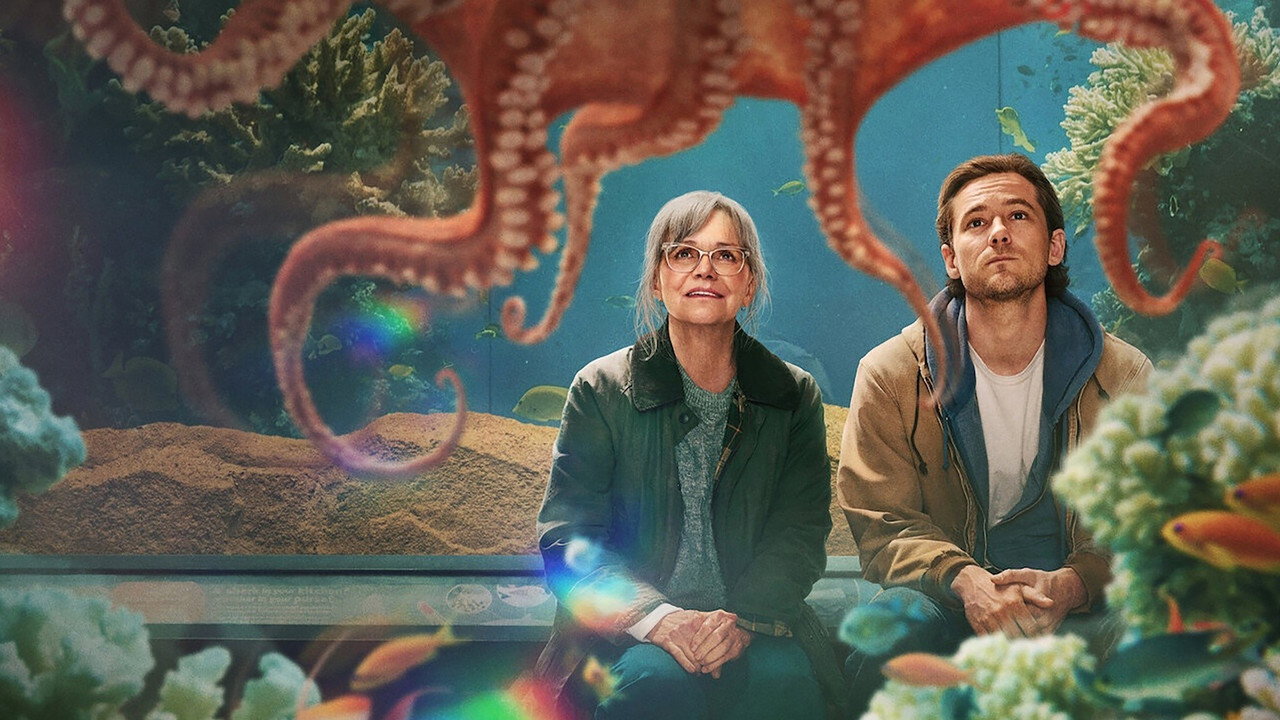
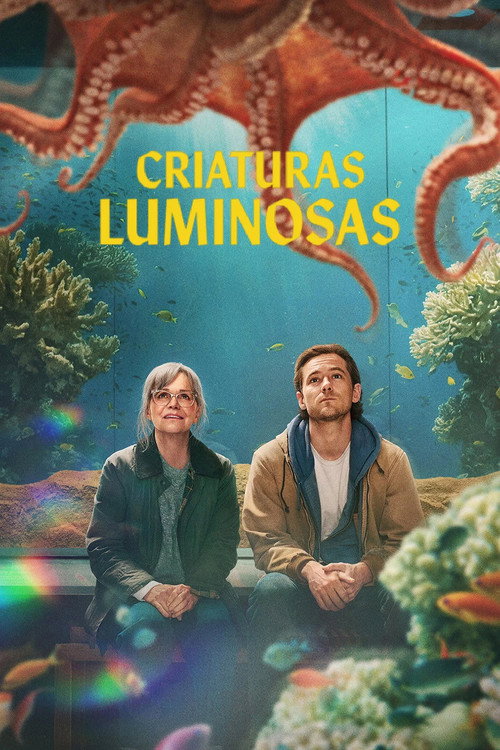
En este drama, basado en el bestseller homónimo, una viuda forja un vínculo con un pulpo muy listo y un joven a la deriva mientras trabaja de noche en un pequeño acuario.





En este drama, basado en el bestseller homónimo, una viuda forja un vínculo con un pulpo muy listo y un joven a la deriva mientras trabaja de noche en un pequeño acuario.

(CASTELLANO) Criaturas luminosas es una de esas películas que no necesitan hacer demasiado ruido para funcionar. Tiene una historia sencilla, amable, triste en el fondo, pero contada con una suavidad que la hace muy agradable de ver. No es una película que quiera romperte por dentro ni dejarte hundido, aunque habla de pérdidas, soledad y heridas antiguas. Más bien intenta acompañarte, llevarte poco a poco, y dejarte con una emoción limpia. Lo mejor está en el tono. La película sabe moverse entre la ternura y la melancolía sin convertirse casi nunca en un drama pesado. Hay momentos previsibles, sí, y alguna zona demasiado cómoda, pero también hay una calidez que compensa bastante esas debilidades. Es una película sentimental, pero no completamente empalagosa; busca emocionar, pero no siempre fuerza la lágrima. Sally Field sostiene muy bien todo ese equilibrio. Su presencia da verdad a una historia que podría haber caído fácilmente en el telefilme bonito pero olvidable. A su lado, Lewis Pullman aporta fragilidad y humanidad, y la relación entre los personajes funciona mejor cuanto menos se empeña la película en subrayarla. Lo más bonito es cuando deja respirar los silencios, los gestos pequeños y esa sensación de que cada persona arrastra algo que no siempre sabe contar. La parte del pulpo podría haber sido ridícula, y sin embargo tiene encanto. No porque la película consiga siempre que ese elemento sea profundo o sorprendente, sino porque lo integra desde una especie de cuento triste y luminoso. Hay algo casi ingenuo en la propuesta, pero también algo honesto: la idea de que a veces una conexión inesperada, incluso imposible, puede ayudar a mirar el dolor de otra manera. Eso no significa que Criaturas luminosas sea perfecta. Le falta algo de riesgo, algo de filo, quizá un poco más de conflicto real. A veces parece demasiado decidida a ser amable, y eso le resta fuerza. Hay momentos en los que uno nota demasiado la estructura emocional, como si la película colocara cada sentimiento justo donde toca. Pero aun así funciona, porque sus emociones están bien ubicadas y porque nunca resulta desagradable ni pesada. Es una película bonita, tierna y triste, de esas que se ven muy bien una tarde tranquila. No es una gran obra, ni lo pretende, pero tiene corazón, buenos intérpretes y una melancolía luminosa que acaba ganando terreno. Puede que sea blanda, puede que sea algo previsible, pero también deja una sensación cálida. Y a veces eso basta. (ENGLISH) Remarkably Bright Creatures is one of those films that does not need to make too much noise to work. It has a simple, gentle story, sad underneath, but told with a softness that makes it very pleasant to watch. It is not a film that wants to break you apart or leave you devastated, even though it deals with loss, loneliness and old wounds. Instead, it tries to accompany you, to carry you slowly, and to leave you with a clean kind of emotion. The best thing about it is its tone. The film knows how to move between tenderness and melancholy without almost ever becoming a heavy drama. There are predictable moments, yes, and some areas that feel too comfortable, but there is also a warmth that makes up for many of those weaknesses. It is a sentimental film, but not completely sugary; it wants to move you, but it does not always force the tear. Sally Field holds that balance very well. Her presence gives truth to a story that could easily have become a pretty but forgettable TV movie. Beside her, Lewis Pullman brings fragility and humanity, and the relationship between the characters works best when the film stops underlining it too much. The most beautiful moments come when it lets silences, small gestures and the feeling that every person carries something they do not always know how to explain breathe. The octopus element could have been ridiculous, and yet it has charm. Not because the film always manages to make it deep or surprising, but because it integrates it through a kind of sad and luminous fable. There is something almost naïve in the proposal, but also something honest: the idea that sometimes an unexpected, even impossible connection can help us look at pain in a different way. That does not mean Remarkably Bright Creatures is perfect. It lacks some risk, some edge, perhaps a little more real conflict. At times it seems too determined to be kind, and that weakens it. There are moments when you can feel the emotional structure too clearly, as if the film were placing every feeling exactly where it belongs. Even so, it works, because its emotions are well placed and because it is never unpleasant or heavy. It is a beautiful, tender and sad film, the kind that is very easy to watch on a quiet afternoon. It is not a great work, nor does it try to be, but it has heart, good performances and a luminous melancholy that gradually wins you over. It may be soft, it may be somewhat predictable, but it also leaves a warm feeling behind. And sometimes that is enough.

